Table of Content
In the middle third of the 19th century, Cleveland's municipal government was the ward of local businessmen. More businessmen than politicians, the part-time officeholders embraced the city booster philosophy of the day and used the municipality to promote civic growth with a mixture of boastful oratory and public spending on infrastructure improvements designed to attract new business to the city. Until the late 19th century, Cleveland was a low-tax, fiscally prudent municipality, unlike many American cities. In general, the 19th century was marked by speculation-induced financial panics, and cities emerged as irresponsible parties to the speculative fever in their flagrant issue of municipal bonds to fund local improvement schemes of dubious worth and inflated value. In the aftermath of each panic, state legislatures imposed more-restrictive city charters with respect to executive authority, policy initiatives, debt accumulation, and municipal independence of the state legislature.
Foreign-language newspapers, though not so numerous as they had once been, were still published. New HISPANIC and Asian immigrants, meanwhile, had come to Cleveland, and their numbers were growing. While residential segregation persisted, blacks no longer were concentrated in crowded ghettos. Indeed, such areas as Hough and Central were now characterized by vast stretches of vacant land, with little prospect that anything would ever be built there.
Film Alley Terrell
In addition, a planned residential neighborhood, Clinton Square, located just beyond the city limits near the shore, had a central square and a goal of preserving the privacy of residents. All of these ventures temporarily raised land costs in the area, and a number of local investors did benefit. For instance, in Mar. 1835, a tavern located on the west bank changed hands at a profit of $3,000 in 1 day. Few investors received similar windfalls, however, since these ventures failed because of national economic developments.

Welles is portrayed by three avatars as he comes to grips with his own death in the 2020 filmopera Orson Rehearsed by composer director Daron Hagen. Voice actor Maurice LaMarche is known for his Welles impression, heard in Ed Wood (in which he dubbed the dialog of Vincent D'Onofrio); the 1994–95 primetime animated series, The Critic; a 2006 episode of The Simpsons; and a 2011 episode of Futurama for which LaMarche won an Emmy Award. The voice he created for the character Brain from the animated series Animaniacs and Pinky and the Brain was largely influenced by Welles. Dune, an early attempt at adapting Frank Herbert's sci-fi novel by Chilean film director Alejandro Jodorowsky, was to star Welles as the evil Baron Vladimir Harkonnen. Jodorowsky had personally chosen Welles for the role, but the planned film never advanced past pre-production.
Citizen Kane
Finally, on the eve of the CIVIL WAR, some Clevelanders began to record the proud history of their progress. The economy continued to be the driving force of change during these years, as canal expansion and railroad construction led all other developments. After 1840, feeder lines connecting the canal with Erie, Pa., the Mahoning Valley, Pittsburgh, and Marietta on the Ohio River ended the monopoly of the Ohio Canal's north-south trunk line as they provided alternate routes and commercial centers. These canals affected Cleveland in much the same way railroads would in the 1850s, for they strengthened its hold on certain commodities, such as grain, while they reduced traffic in other goods, such as foodstuffs. The Mahoning Canal was particularly important for Cleveland, since it opened a direct route to the interior of the Western Reserve and to the Mahoning Valley that funneled dairy products, wool, and coal to the city. While some did make money, it was only temporary in most cases, for surprisingly, not all the economic news during the thirties was positive.

But the city retained important advantages, not the least of which were hardworking and generous citizens proud of the city's past and hopeful for its future. For the fate of Cleveland, many realized, was not sealed by its past mix of industries and occupations, only influenced • by it. The future depended in large part on the intelligence and wisdom with which those who remained would marshal their resources for the betterment of a gritty city determined not only to survive but also to rebuild. Cleveland had been losing population since 1950, but the exodus accelerated dramatically after 1960, and by the early 1970s the rate of loss had climbed to some 20,000 persons a year.
LaBlast Dance Fitness Class
Originally deemed not viable as a pilot, the film was not aired until 1958—and won the Peabody Award for excellence. Welles served as host and interviewer, his commentary including documentary facts and his own personal observations . In 1952, Welles continued finding work in England after the success of the Harry Lime radio show. Harry Alan Towers offered Welles another series, The Black Museum, which ran for 52 weeks with Welles as host and narrator. Director Herbert Wilcox offered Welles the part of the murdered victim in Trent's Last Case, based on the novel by E. In 1953, the BBC hired Welles to read an hour of selections from Walt Whitman's epic poem Song of Myself.

Mattingly was one of three officers who took part in the raid that killed Taylor, and the officer allegedly wounded by Walker. In October 2020, Mattingly's lawyer announced that he was filing a countersuit against Walker for his injury. The suit also claims that Walker's response to the officers raid via a no-knock warrant was "outrageous, intolerable and offends all accepted standards of decency or morality". On August 4, 2022 the Justice Department unsealed charges against three defendants with falsifying a search warrant affidavit and a fourth with two counts of deprivation of civil rights for shooting through Taylor's window and glass door. As detailed by the United States Department of Justice, the investigations resulted in two grand jury indictments and one felony information. Attorney General Merrick Garland and Assistant Attorney General Kristen Clarke announce federal civil rights charges against four Louisville Metro Police Department officers, August 4, 2022.
War work
Sometimes the distinctions in each model are minimal — one company might label certain types of purchases as “office supplies” while another categorizes them with the name of their office retailer of choice, for instance. Prior to joining Protocol in 2019, Bennett was executive director of global strategic partnerships at POLITICO, where he led strategic growth efforts including POLITICO's European expansion in Brussels and POLITICO's creative agency POLITICO Focus during his six years with the company. Prior to POLITICO, Bennett was co-founder and CMO of Hinge, the mobile dating company recently acquired by Match Group.
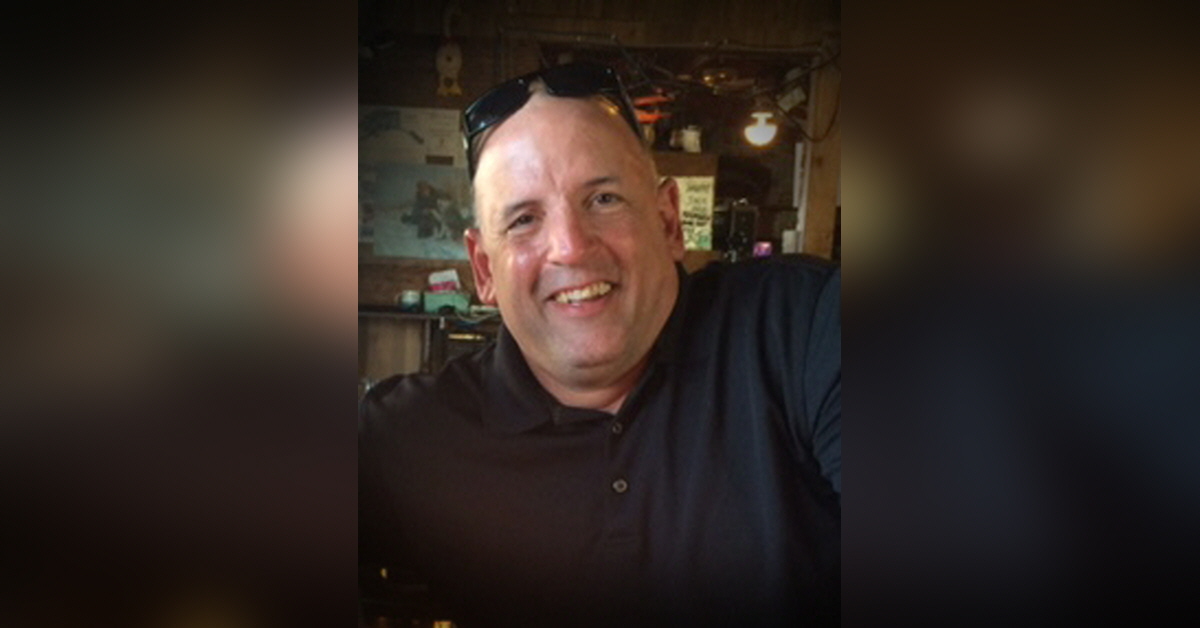
Myles Cosgrove is an LMPD police officer who was transferred to the department's narcotics division in 2016. Jonathan Mattingly is a retired LMPD police officer who joined the department in 2000, became a sergeant in 2009, and joined the narcotics division in 2016. On August 4, 2022, Hankison and three other officers were federally charged with violating Taylor's civil rights, unlawful conspiracy, obstruction, and unconstitutional use of force. One of the four officers, Kelly Goodlett, later pleaded guilty to two counts of conspiracy, marking the first convictions in the case. However, creating consistency through the ML lifecycle from model training to deployment to monitoring becomes increasingly difficult as companies cobble together open-source or vendor-built machine learning components, said John Thomas, vice president and distinguished engineer at IBM. For instance, Hollman said the company built an ML feature management platform from the ground up.
These concentrations had their east side equivalents but should not be viewed as ghettos, since many residents were not forced into them by discrimination but chose to live close to countrymen. However, the increased presence of foreign-born undoubtedly raised ethnic consciousness in the city. A newspaper editorial on 18 Feb. 1851 offered a formula of assimilation that few followed when it advised foreigners to immediately become "Americanized" by "casting off" their European skins and encouraged natives to welcome them as brothers. Throughout the period, ethnic groups, especially Germans, created numerous organizations to preserve their languages and cultures in addition to the self-help groups formed in the 1830s. Germans added a German-language newspaper in 1846, a military group, the German Guards, in 1847, and a music society in 1848. In the 1850s, many Saengerbunden, German singing societies, were formed, and in 1859 the city hosted a North American SAENGERFEST, which included a group of 400 singers from Cleveland representing 24 separate local societies.
20th St. Clevelanders witnessed the transformation of a former public dump into an attractively landscaped fairgrounds. The exposition offered exhibits of art, SCIENCE, industry, and horticulture, as well as popular entertainment. Extensive use of light as an architectural element showed off Cleveland's prominence as a center of lighting-industry research. The Great Lakes Exposition advertised Cleveland as a progressive, productive city and pointed the way toward economic recovery. Among its lasting benefits was the final realization of the Group Plan; the last building remaining in the area designated for the Mall was removed in 1935.
By 1980, the Cleveland school system was spending more than $12 million annually on transportation, and enrollment had declined by more than 1/3, from 123,00 in 1976 to 81,000. Mayor RALPH S. LOCHERand other city leaders could not or would not see the trouble brewing despite sporadic outbreaks of violence during the early part of the summer of 1966. Roving gangs were harassing drivers and hurling rocks and bottles at businesses and passing vehicles on Superior Ave. A brief, uneasy lull was broken on Monday night, 18 July, by an outbreak of violence that would last for 4 days and result in the deaths of 4 blacks and millions of dollars of damage to property.
It was timed to coincide with the court of common pleas session in Cleveland, which would bring a large number of people to the village. Many informal social contacts were made at these sessions, where much business of all kinds took place. In sum, by 1824 these activities reflected a significant change from the frontier survival period. Furthermore, Cleveland had a newspaper beginning in 1818, which informed the growing local community and acted as an advocate of its growing importance. The businessmen and professionals who built the city's manufacturing sector required a local government that not only was antiunion but also would maintain existing infrastructure, and fund those environmental-reform measures that could not be legislated into special-purpose districts. In 1900, the public money spent on all the projects favored by the two elite groups amounted to 69% of all public monies raised from the tax duplicate in Cuyahoga County.




No comments:
Post a Comment